

kakinang INSIGHTS · 2026-09-28
What should AI ask before a freelance designer quotes a project?
'How much for a brand identity?' leaves most of the project undefined. AI Help me design a project-scope enquiry and human quotation workflow for a freelance designer. can receive the enquiry while a designer is working, but should not turn a vague message into a fixed price. The bakery brand in this example is fictional.

Ask where the work will be used
First ask whether the client is launching a brand, refreshing an existing identity or preparing one campaign. Then identify channels such as website, signage, packaging and social media, followed by required deliverables. 'Logo' can mean a single image or a system of wordmarks, colours, type, guidelines and file formats. Designer and client may use the same word while imagining very different work.
A short enquiry covers the goal and audience, intended uses, deliverables, existing assets and copy, and desired completion date. Budget and the internal decision maker follow. Mark an unknown as 'to discuss' rather than forcing a guess. AIGA's design agreement and Adobe's service-contract template both separate work description, deliverables, milestones and timing. They are useful structural references, not local legal advice.
In the fictional case a new bakery requests brand design two weeks before opening. AI asks whether the request is a mark alone or also signs and packaging files, whether the name and copy are final, and who approves the result. Signage and packaging require production specifications and handoff time. If the name may change, a two-week promise is premature.
Give the designer a reviewable brief
kakinang can publish service descriptions and FAQs as approved knowledge, then capture a consented lead after the visitor answers. Separate confirmed facts, open questions and the client's own wording. If the client says 'premium feel', preserve that phrase rather than silently convert it to 'minimalist'. AI should not decide the visual direction.
A portfolio shows style, but does not define what every new engagement includes. The service page should state minimum deliverables, options and exclusions such as copywriting, printing, photography or trademark search. For third-party images and fonts, ask who holds the use rights and leave final clearance to the designer. A reference image may point to colour, composition or tone; it is not permission to copy it.
Collect only a suitable contact route, need summary and timing for follow-up. Staff check the lead in the back office. Email alerts require recipients and SMTP; without them AI cannot claim the designer was notified immediately. An asynchronous human handoff can truthfully promise later review rather than pretend someone is live while designing.
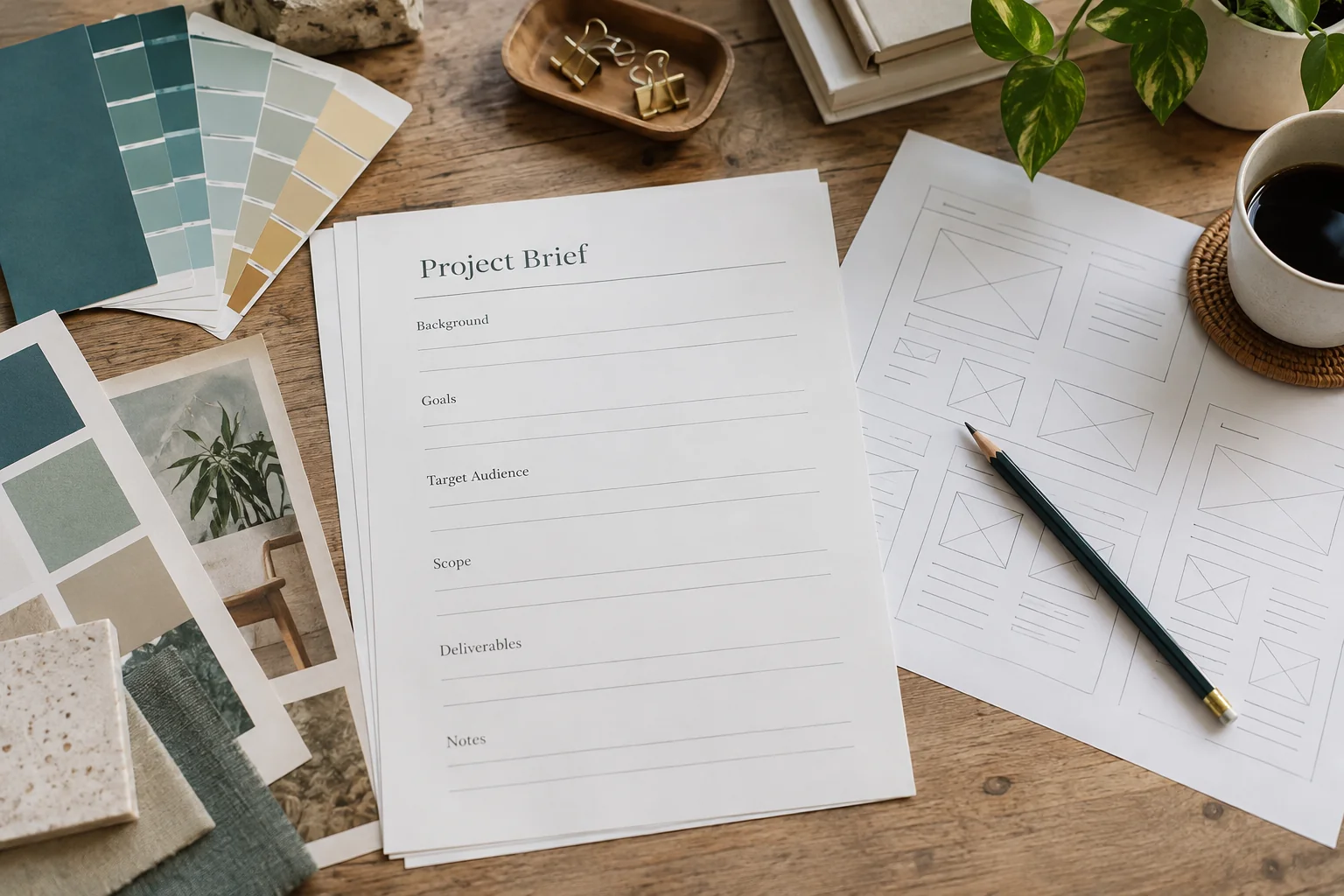
Confirm changes and responsibility before pricing
Before a quote, the designer checks quantities and formats, proposal and revision rounds, client-input deadlines, approval authority, use rights and subcontracted work. 'We might need a social kit later' belongs outside the present scope until agreed. Research, meetings, photography and printing should be identified separately. AI can point out missing facts but cannot sign a contract for the designer.
If the fictional bakery adds a printed box and ten social sizes after quotation, create a change summary and review the price and schedule. Never mix the old brief with new deliverables. A 'yes' in chat must refer to a specific version of terms; formal work begins under the proposal and agreement approved by both parties.
Weekly, review promising enquiries without follow-up, fields repeatedly missing and common post-quote changes. Add a clear copy-responsibility answer if that is frequently unclear, and ask earlier about milestone dates if timing often causes rework. The measure is a brief that can be assessed with fewer exchanges and a clear expectation for human response, not chat volume.
Ask who supplies each asset as a concrete task. Is there an editable old logo? Who verifies packaging copy? Are photographs licensed for commercial advertising? If the answers are missing, the timeline cannot simply start today. Mark each item as client to supply, designer to verify or approved to use so both sides can see dependencies before final delivery.
Use observable milestones: confirmed brief, direction proposal, first draft, consolidated feedback, approval and exports. At each point say what the client provides, what the designer returns and when a response is expected. If partners and an agency all approve, identify who consolidates comments. Scattered messages from several people are not independent formal decisions. Once work starts, versions and revision rounds follow the agreed document, not AI's memory of a chat.
Handle poor fit openly. If the visitor needs web programming but the freelancer only offers identity design, state the scope and a suitable alternate route rather than collecting details and delaying. For an impossible date, discuss phased delivery instead of promising rushed work. Clear fit and non-fit terms help the visitor choose a real next step and reduce wasted quoting cycles.
Review a quote against a scope-change table: original request, confirmed deliverables, and open item with owner. If 'brand identity' also includes printing, trademark filing and a website, list the work and outside suppliers separately. Say which parts can be priced now and which await files or production specifications, with a clear date for the next review. A client need not reveal a budget to discuss scope and priorities; AI must not guess purchasing power. Send a brief the client can correct, including brand name, file formats and approval authority, before writing a formal proposal.

Questions teams ask
Can AI quote a full brand project?
It may explain a published fixed package; custom scope needs the designer's assessment.
What if the client does not know file formats?
Ask about uses and leave formats for the designer to propose.
Is a lead already an accepted project?
No. Deliverables, price, timing and agreement remain for both parties to approve.
Can a reference image simply be copied?
Clarify its purpose and rights; do not treat another person's work as a ready specification.